
By default, Kubernetes use the Calico CNI plugin to allocate network interfaces for the containers within the pod. The result is one network interface within the container. For use cases, such as routing, packet forwarding, content based routing , the container needs more than one interface for its CNF realization. With Multi plugin, this featureContinue reading “Achieve Multiple Network Interfaces inside Kubernetes Pod”
Author Archives: Keyuan Zhang
Enhance Performance of Containerized Application using SR-IOV
When you digitized and moved your traditional application running on bare metal platform to the cloud in the form of a container, one drawback is the network performance degradation in the virtualized environment no matter what hypervisor you are using. One way to keep the similar network performance is to use modern network interface cardContinue reading “Enhance Performance of Containerized Application using SR-IOV”
IoT: From concept to daily must have
The Internet of things (IoT) made rapid progress from a pure academic concept to play a crucial role in our daily life. From my point of view, the IoT applications can be classified into three categories: Must have ones which change our lifestyle and ways people are living. Smartphones, connected through 5G/4G LTE network withContinue reading “IoT: From concept to daily must have”
Access K8s API within Container
Modern applications are transformed to microservice based, API driven architecture. When the application is containerized, it needs to access other applications’ published APIs and K8s cluster API for its business logic. In this article, an python application is containerized, its container image is built and pushed into docker register, an kubernetes manifest is created andContinue reading “Access K8s API within Container”
Secure Cloud Infrastructure and Deployed Applications through Multiple Principles
When microservice oriented applications are deployed into Kubernetes orchestrated cloud platform, the security model works well in traditional enterprise application deployment workflow will face a lot of new challenges and needs to be transformed and microservice friendly also. To achieve end to end application level security needs coordination between different components within your cloud cluster:Continue reading “Secure Cloud Infrastructure and Deployed Applications through Multiple Principles”
Achieve High Performance Cloud Computing using EPA
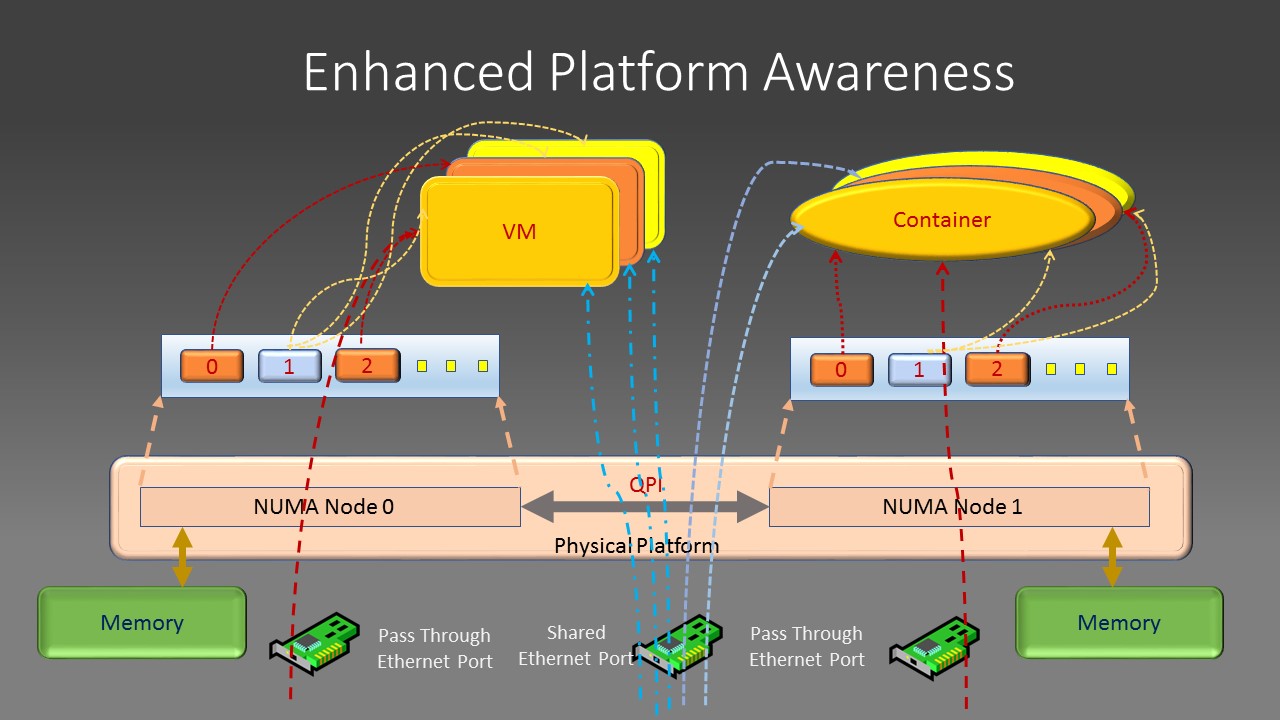
Use EPA( Enhanced Platform Awareness ) to meet cloud application’s performance requirement
What,Why and How: Infrastructure Orchestration
In the cloud computing field, there are already a lot of open sourced or private automation tools and infrastructure solutions such as Ansible, Chef, Puppet, OpenStack, Kubernetes. There are many on-premise or public cloud providers available for your infrastructure and applications. People asked why we need more orchestration solutions ? What is Infrastructure Orchestructure ?Continue reading “What,Why and How: Infrastructure Orchestration”
Achieve CNCF WorkFlow using Azure Public Cloud
CNCF recommends four steps to achieve cloud native for your application: Containerization of your application through Docker and push its image into registry Setup CI/CD pipeline for DevOps automation Using orchestrator such as Kubernetes to manage the full application life cycle Add observability and analysis capacity to your deployed application Add building block such asContinue reading “Achieve CNCF WorkFlow using Azure Public Cloud”
Video:Utilize Multiple Technologies for Cloud Infrastructure
Multiple cloud Virtual Infrastructure Manager (VIM) exists for cloud infrastructure, such as OpenStack, Kubernetes, Kubeless, CloudStack to name a few. How to combine and utilize the best pieces from different solutions for the sake of faster cloud deployment, easy to manage, update and upgrade ? What’s the role of service mesh, API gateway will playContinue reading “Video:Utilize Multiple Technologies for Cloud Infrastructure”
Two Key Takeaways from F5 Agility Conference
Digital transform will change the way of code development, service delivery, daily working style and more. How do we adapt to this change? We need to adopt a batch of new technologies, culture changes and promote new best practices. From a technology point of view, a shift from monolithic way of development to cloud native,Continue reading “Two Key Takeaways from F5 Agility Conference”

